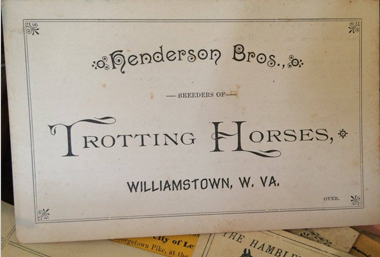
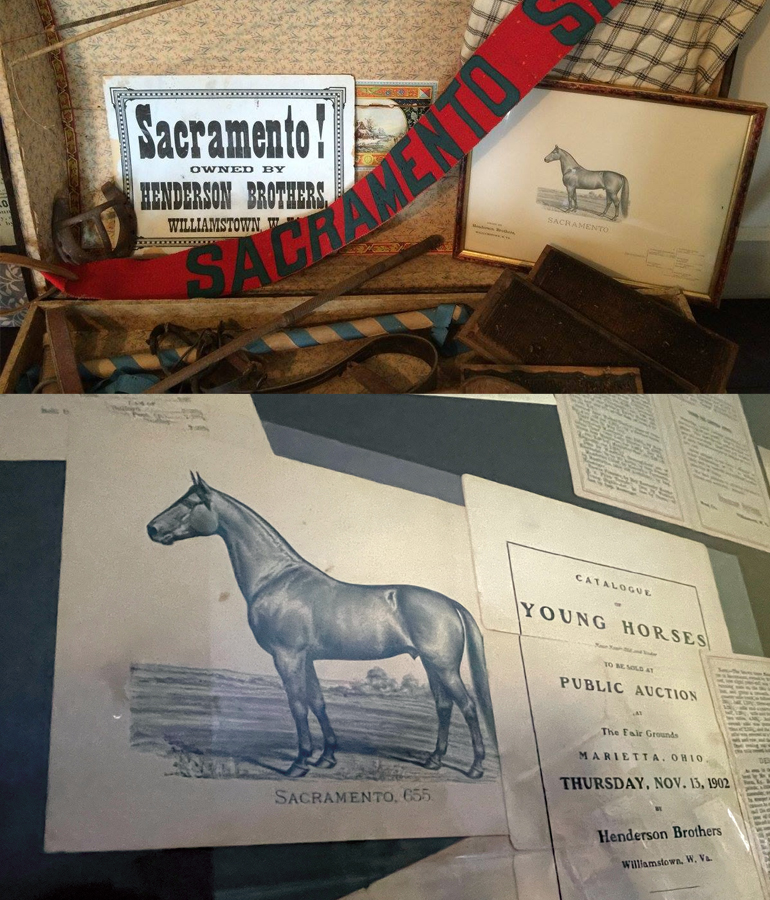
From 1867 to 1906, the Henderson Brothers operated one of the most successful Standard Trotting Horse farms in the United States.
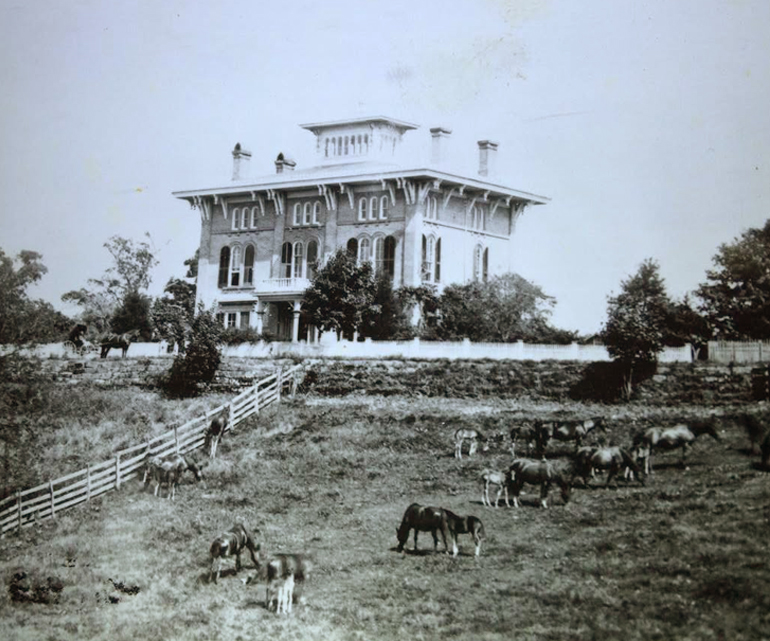
Henderson brothers Henry Clay, Jock Bedell, and Arthur Taylor statred a Standard Trotting Horse breeding and boarding enterprise at Henderson Hall. The brothers were already operating Henderson Hall farms and had esteemed clients for their livestock that included prominent people such as the Heinz and Biltmore families. When they expanded their operation to include standard bred horses, they already had established a credible reputation in the agricultural community.
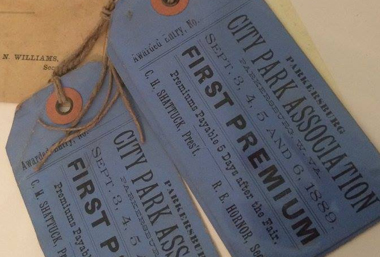
Standard bred refers to horses that held specific qualities suitable for harness racing—a sport that rapidly grew in polularity in the area thanks to the Henderson Brothers’ operation. Racing tracks at City Park in Parkersburg and at the Washington County Fairgrounds in Marietta often hosted events.
To expand their operation, the brothers built barns, breeding facilities, and a training track on the farm, which complimented the many acres of pasture they already had for grazing.
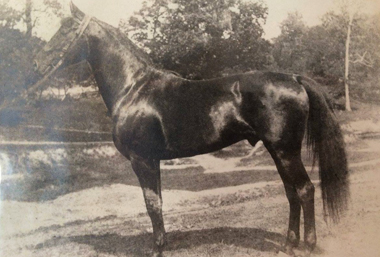
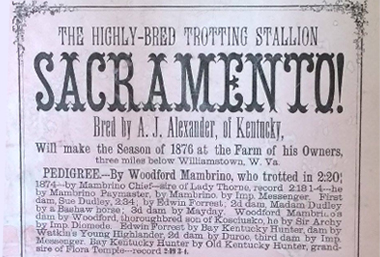
Their breeding stock included the well-known studs Sacramento and Nutguard, whose bloodlines can be found throughout trotters today. The Henderson Brothers paid homage to their Scottish roots through the names given to many of their horses-Selkirk, Scotch Bonnet, and Scotia, which means Scotland.
In 1906, many of their horses were lost when the largest barn on the farm burnt to the ground. The family was unable to save the animals, sulkies, farm equipment and stores of corn and wheat inside because of the size of the blaze. The Henderson Brothers ceased their operation not long after this tragedy.
HORSE BLOODLINES OF NOTE
Nutguard
Horses Raised for
Aabout the Images
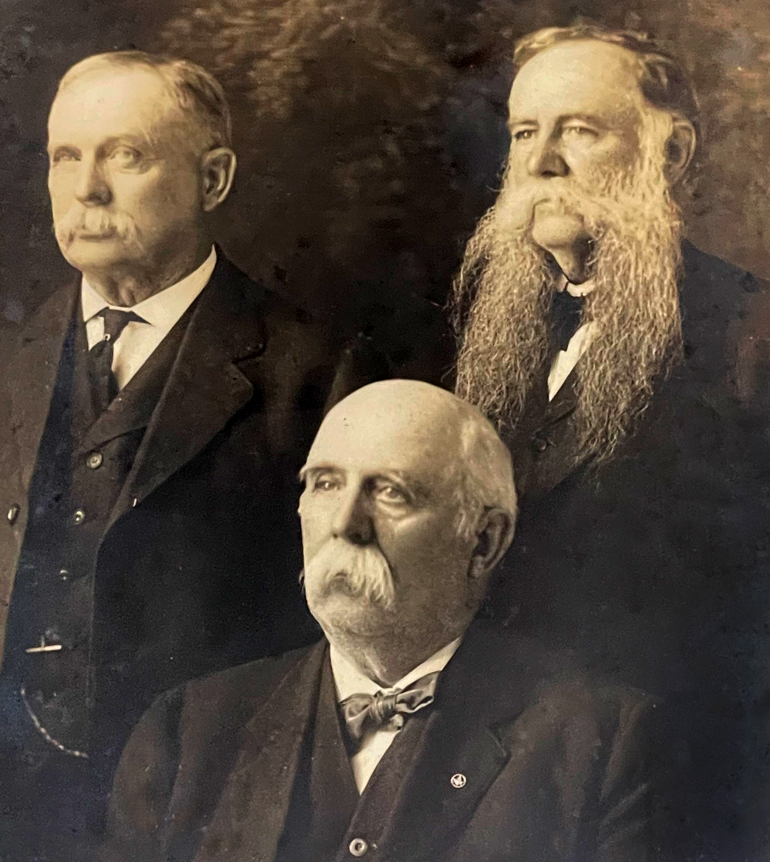
The Henderson Brothers: Arthur Taylor, Henry Clay, and Jock Bedell
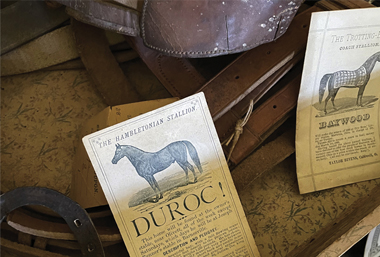
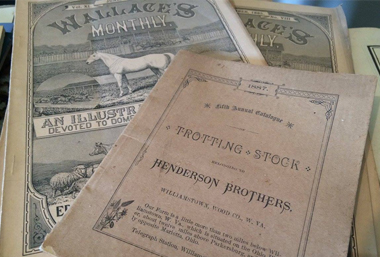
The Hendersons kept many of the catalogs, flyers, saddles, banners and other momentos relating to their breeding horses. These can be see today at Henderson Hall.